
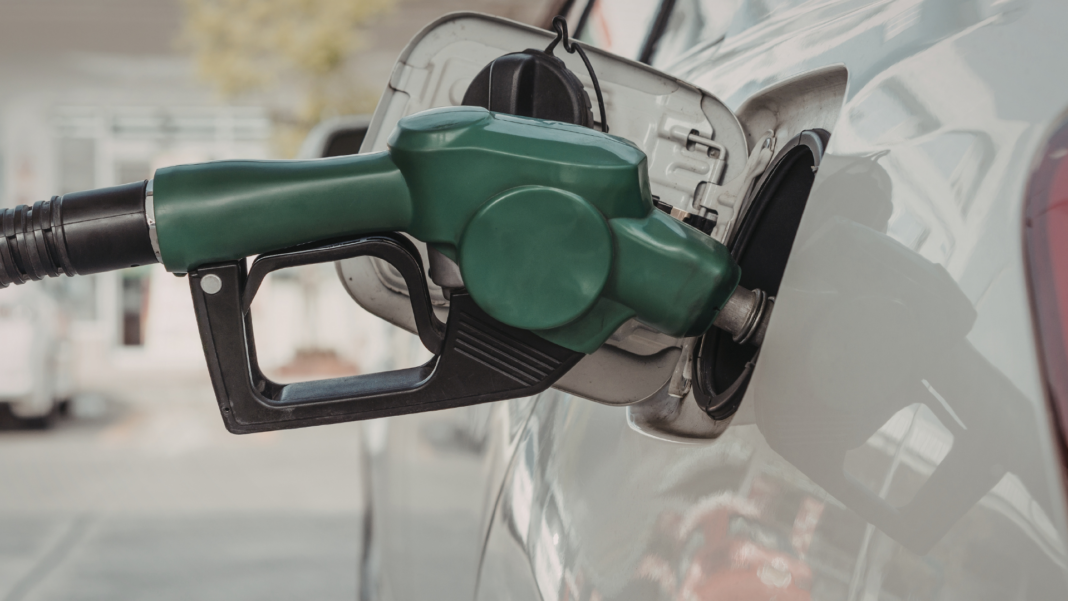

With no end in sight to the war launched against Iran by the United States and Israel, oil and gas prices are soaring, hitting consumers in the pocket across the globe. South Africans are bracing for a sharp fuel price increase in April, with petrol projected to rise by up to R4 per litre.
The hike will ripple through households, public transport, and the cost of everyday goods.
A mid-March date from the Central Energy Fund (CEF) shows petrol could increase by around R3.80 to R4 per litre, while diesel, widely used in taxis and goods transport, could climb by R6 to R7 per litre.
The surge comes amidst the escalating conflict with gas fields and oil refineries targeted by the protagonists. Disruptions to oil supply routes and fears of further instability have pushed global crude prices above $110 per barrel, directly impacting import-dependent countries like South Africa.
The weakening of the rand – now around R16.77 to the dollar – makes fuel imports even more expensive, compounding the pressure on local prices.
The Automobile Association (AA) has warned that these increases will have knock-on effects across the economy. Taxi fares are expected to rise as operators pass on higher diesel costs, while food and other goods transported by road are likely to become more expensive, stretching households’ budgets further.
Exacerbating the situation, domestic levies will also rise in April, adding another 21 cents per litre through the General Fuel Levy, Road Accident Fund, and carbon tax.
With the combined pressure of global conflict, a weaker currency, and rising taxes, South Africans are set to face one of the steepest fuel-related cost increases in recent years, affecting daily life from commuting to grocery bills.
The Gulf energy crisis is now reverberating around the world.
Asian nations heavily reliant on Middle Eastern oil imports are rolling out emergency measures to conserve energy and protect dwindling reserves as conflict in the region disrupts global supply.

According to data cited by the Financial Times, Singapore is fully reliant on imported crude oil, followed by the Philippines at 95%, Thailand at 79.5% and Vietnam at 56.8%. Brunei depends on imports for 41.3% of its supply, while Indonesia and Malaysia are comparatively less exposed at 35.2% and 15.6%, respectively.
From four-day work weeks to tapping strategic oil reserves, here are some of the measures being taken.
China:
China, the world’s biggest crude importer, has told top oil refiners to suspend exports of diesel and gasoline, according to Bloomberg.
Anticipating supply disruptions, China also ramped up crude imports at the start of 2026. Now, it is close to tapping its vast stockpiles, taking as much as 1 million barrels per day over the next four to six weeks, Bloomberg reported Wednesday.
Thailand:
Thailand has announced austerity measures, such as remote work for government employees and using stairs instead of elevators.
Other measures include suspending overseas trips, setting air conditioning at 26-27 °C (around 80F), wearing short-sleeved shirts without neckties, turning off electrical appliances, reducing photocopier use and promoting online meetings.
Thailand has also suspended its oil exports.
Japan:
Japan on Monday began its largest-ever release of oil from its strategic reserves. The release is equivalent to 15 days of domestic consumption and aims to ease supply concerns and stabilize petroleum distribution. Prime Minister Sanae Takaichi also announced subsidies to effectively cap gasoline prices at around ¥170 ($1.07) per litre (0.26 gallon) if prices rise further. Similar measures would also apply to diesel, heavy oil and kerosene.

South Korea:
South Korean President Lee Jae Myung earlier this month urged authorities to “swiftly” introduce a cap on domestic fuel prices and take pre-emptive measures. Seoul has also pledged to release a record 22.46 million barrels from its strategic reserves, in line with an agreement among International Energy Agency (IEA) members to stabilize oil markets.
The government also announced Monday that it would lift limits on coal-fired plants and raise nuclear power plant utilization to as high as 80%.
The government plans to fund a supplementary budget aimed at cushioning households and businesses from rising energy costs, according to Bloomberg.
Sri Lanka:
Sri Lanka has designated Wednesdays as holidays as part of a four-day workweek scheme amid the fuel crisis. The country is also implementing a digital QR code-based system to ration fuel sales. President Anura Kumara Dissanayake also urged electric car owners to stop charging at night, when the grid relies on fossil fuel power stations.
During the day, the country has excess energy from solar, he said.
Dissanayake also said that while the country was unable to secure two shipments of 90,000 tonnes of crude oil due to the war, it is in talks with India and Russia to purchase refined products.
Pakistan:
Pakistan has ordered half of its public sector employees to work from home and imposed a two-week school closure. Additional measures include cutting fuel allowances for official vehicles and reducing the number of government cars in traffic.
The Pakistan Day parade on March 23 has also been cancelled, with observances limited to a simple flag-hoisting ceremony, according to Radio Pakistan.
Myanmar:
Myanmar has imposed fuel usage restrictions on the use of private vehicles, as “a precautionary measure for long-term stability.” Under the scheme, non-electric vehicles with even-numbered plates will only be allowed to drive on even dates, and those with odd-numbered plates on odd dates.

India:
The Indian government has invoked emergency powers to direct public and private refineries to boost liquefied petroleum gas (LPG) production to prevent a shortage of cooking fuel.
Domestic supply has been prioritized for households, while imports will be allocated to essential sectors such as hospitals and schools. It has also increased its crude oil imports from Russia.
Nepal:
The country had a period of panic buying and shortages in cooking gas cylinders, according to media reports. Authorities were forced to take measures, and the country’s main oil company said it would only fill empty cylinders halfway.
Bangladesh:
Bangladesh has ordered its educational institutions to close nationwide to conserve fuel and electricity. Universities were also directed to begin their Eid al-Fitr holidays ahead of schedule, effectively shutting campuses across the country.
The government also issued guidelines encouraging institutions and offices to use electricity more efficiently, including maximizing natural daylight and minimizing unnecessary lighting and power consumption.
It has also started imposing planned blackouts.
Cambodia:
Around 2,000 fuel depots and petrol stations in Cambodia were forced to close due to supply disruptions, though 1,600 have since reopened following inspections, leaving 400 still shut as of Saturday, the Ministry of Commerce said.
The government announced plans to develop its own oil refinery and crude stockpile by 2029. Energy Minister Keo Rottanak told Bloomberg Monday that Cambodia had fuel supplies for less than 30 days but was diversifying energy sources to replenish stock.

Philippines
The Philippines is implementing a four-day workweek for government offices amid the supply disruption. All government agencies were also ordered to cut their fuel and power consumption by 10-20%, while activities such as government study tours and team-building were prohibited, as well as “meetings that can be done online,” according to the GMA News Online. President Ferdinand Marcos Jr. also pledged fuel subsidies and cash transfers to affected sectors.
Vietnam:
Vietnam has urged its citizens to limit movement and work remotely where possible to mitigate the impact of the crisis, according to Nikkei Asia. Authorities are also encouraging commuters to switch to bicycles, carpool and reduce private car use unless necessary.
Businesses have also been advised to adopt renewable energy sources such as solar and wind, upgrade to more energy-efficient machinery and optimize logistics by transporting larger volumes per shipment to conserve fuel.
The government has cut taxes on various petroleum products to 0% through the end of April in a bid to ease cost pressures, according to Tuoi Tre News.
Malaysia:
Malaysians have been urged to conserve energy to help ensure domestic fuel reserves last longer, according to The Borneo Post.
Deputy Prime Minister Fadillah Yusof said that while not currently under consideration, the government may impose restrictions on fuel exports as a last resort if domestic supply becomes critical. The government also has existing fuel subsidies in place to help cushion the impact on consumers.
Singapore:
Singapore has urged people to conserve energy and use more energy-efficient appliances. However, Minister Tan See Leng said Singapore’s energy supplies remain secure, according to The Straits Times.
Indonesia:
The government has promised to maintain subsidized fuel prices throughout the Eid al-Fitr holiday.
“Our issue right now is not supply. Stock is not a problem; everything is available. The challenge lies in the price, and we are currently conducting an exercise to formulate comprehensive measures,” Energy and Mineral Resources Minister Bahlil Lahadalia said
March 9.
Authorities are also considering measures such as a four-day work week or remote work to curb fuel consumption, according to media reports.
Taiwan:
Taiwan is using a dual price-smoothing mechanism and temporary fuel commodity tax cuts to limit the surges in gasoline and diesel prices.
State-owned CPC Corp is also absorbing part of the global fuel cost rises. Targeted subsidies for sectors such as agriculture and fisheries are also in place to ease the impact of higher energy prices.
Hong Kong:
Hong Kong has reached out to various suppliers to guarantee a stable supply of fuel, according to the public broadcaster RTHK.
Chief Executive John Lee has urged suppliers to secure alternative sources where possible and to build sufficient stockpiles.
Authorities are also preparing to adjust the fuel mix for electricity generation and to guard against any potential malpractice.
European Union:
Natural gas prices in the European Union surge more than 25% to their highest level in over 3 years following Iranian strikes on Qatar LNG hub.
The Netherlands:
Rising fuel prices continue to cause concern in the Netherlands and neighbouring Belgium, with gas station owners reporting increased pressure on their operations, broadcaster NOS reported Wednesday.

In the Netherlands, the advisory price for diesel and gasoline has surpassed €2.50 ($2.88) per litre. While not all locations have reached those levels, many drivers find it worthwhile to cross the border into Belgium for cheaper fuel.
Estonia:
The diesel fuel price in Estonia has exceeded that of gasoline at petrol stations and is unlikely to come down before the Middle East conflict is resolved, media reports said Wednesday.
Nigeria:
As fuel costs rise, hundreds of Nigerian drivers who are signed up with ride-hailing services Uber, Bolt and inDrive protested on Wednesday in Lagos over low fares and high commissions while calling on the Lagos assembly to intervene and mandate higher pricing.